Personal Stories
First Light at Omaha: Dog Green Sector, 6 June 1944
At 6:31 a.m. on 6 June 1944, the ramps dropped on Dog Green sector of Omaha Beach. Company A of the 116th Infantry walked into a wall of fire. What happened in the next twenty minutes defined the day.
Walking in Their Footsteps
Author
September 18, 2026
6 min read
## First Light at Omaha: Dog Green Sector, 6 June 1944
The sky over the English Channel was the colour of a bruise. In the grey chop of the sea, thirty-six Higgins boats circled in their assembly patterns five miles offshore, their passengers soaked and seasick and silent. Inside Landing Craft, Vehicle, Personnel 71, Captain Taylor Fellers of Company A, 1st Battalion, 116th Infantry Regiment — the Stonewall Brigade, Virginia National Guard — checked his watch. He had thirty minutes.
By 6:32 a.m., Taylor Fellers would be dead. So would every man who landed with him on Dog Green sector of Omaha Beach. Company A, 116th Infantry would suffer the highest casualty rate of any unit on D-Day: 191 men committed, fewer than 20 able to fight by the time the beach was secured. The story of what happened on that strip of sand in those first terrible minutes is the story of Omaha Beach in its rawest form.
### The Plan and Its Failures
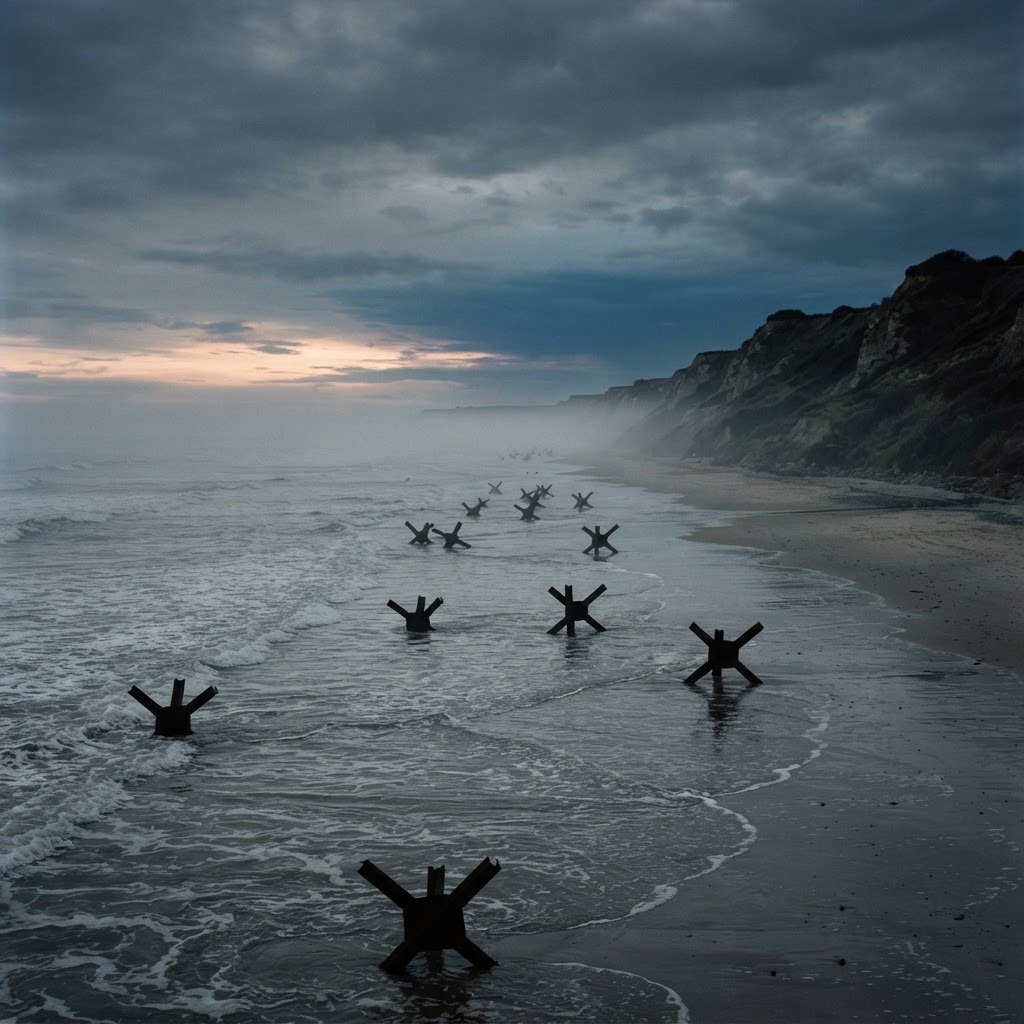
Omaha had never been the easy beach. Its defenders — elements of the veteran German 352nd Infantry Division, whose presence had been detected by Allied intelligence only days before the landing — manned prepared positions along a crescent of bluffs that overlooked 300 metres of open sand with no natural cover. The planners had known this and compensated with firepower: bombers would crater the beach, DD (Duplex Drive) Sherman tanks would lead the infantry ashore, and rocket-firing craft would suppress the German positions in the final minutes before touchdown.
Almost none of it worked. The bombers, fearing they would hit their own men in the murk, delayed their release points by crucial seconds — and dropped their loads miles inland, in empty fields. The sea was too rough for the DD tanks: 27 of 32 launched for the Dog Green and Dog White sectors capsized almost immediately, their crews dragged down with them. The rockets fell short into the surf. When the ramps dropped on Company A's boats, the bluffs above them were intact and manned and ready.
### The Ramps Drop
The boats grounded at 6:31 a.m., slightly east of their intended positions, in water between knee and chest deep. The German fire began before the ramps were fully down. Machine gun positions at the Vierville draw — the WN72 strongpoint — had pre-registered the waterline. The men of Company A were caught in a funnel.
Sergeant Robert Bixler of the 2nd Platoon later recalled that the man beside him was dead before he reached the water. Captain Fellers was killed at the ramp. First Lieutenant Edward Tidrick, leading the 1st Platoon, made it fifteen yards before being hit. As he lay in the surf, he reportedly called to Sergeant Laird Layton to advance — and was killed by a second burst before Layton could reach him.
Within ten minutes, every officer in Company A was dead or wounded. The survivors — perhaps forty men — pressed themselves behind the single obstacle offering any cover: a low wooden post at the high-water mark, around which the bodies of the first wave were already collecting in the tide.
Two hundred metres to the east, Company B was faring only marginally better. Company C and D, landing on adjacent sectors, suffered less — their boats had drifted from the worst of the fire — but the beach was still a killing ground, and the bluffs above remained entirely German.
### The Hour That Changed
It was the small acts of individual courage, repeated across the beach in the hour after the first wave, that finally broke the deadlock. Brigadier General Norman Cota, assistant divisional commander of the 29th Infantry Division, moved along the beach under fire, physically pushing men toward the wire and the bluffs. *
D-Day
Omaha Beach
Dog Green
116th Infantry
Normandy
AI-Generated


