Historical Analysis
The Bridge Too Far: Frost's Stand at Arnhem, September 1944
For four desperate days, Lieutenant Colonel John Frost and fewer than 700 men held the northern end of Arnhem Bridge against the full weight of the SS Panzer Corps. This is the story of those impossible hours.
Walking in Their Footsteps
Author
September 18, 2026
6 min read
## The Bridge Too Far: Frost's Stand at Arnhem, September 1944
On the night of 17 September 1944, a lone bugler sounded the regimental call of the 2nd Parachute Battalion as Lieutenant Colonel John Frost led his men into the darkened streets of Arnhem. Somewhere ahead, across the black ribbon of the Rhine, lay Germany itself. Between them and that prize stood one great steel bridge — and Frost intended to take it.
Operation Market Garden, Field Marshal Bernard Montgomery's audacious plan to end the war by Christmas, had dropped three Allied airborne divisions in a corridor stretching sixty miles through occupied Holland. The Americans of the 82nd and 101st Airborne would seize bridges at Eindhoven, Grave, and Nijmegen. The British 1st Airborne Division, landing furthest north at Arnhem, would grab the final bridge over the Rhine. Then XXX Corps would race up the corridor and cross into Germany. Simple in concept. Catastrophic in execution.
### The March to the Bridge
The drop zones lay eight miles west of Arnhem — a compromise forced on the planners by exaggerated fears of flak. Three routes into the city were assigned to the battalion columns. Only Frost's 2nd Battalion, hugging the river road, broke through. The other routes were blocked almost immediately by elements of the 9th SS Panzer Division Hohenstaufen — a formation whose presence near Arnhem had been flagged by Allied intelligence and largely ignored.
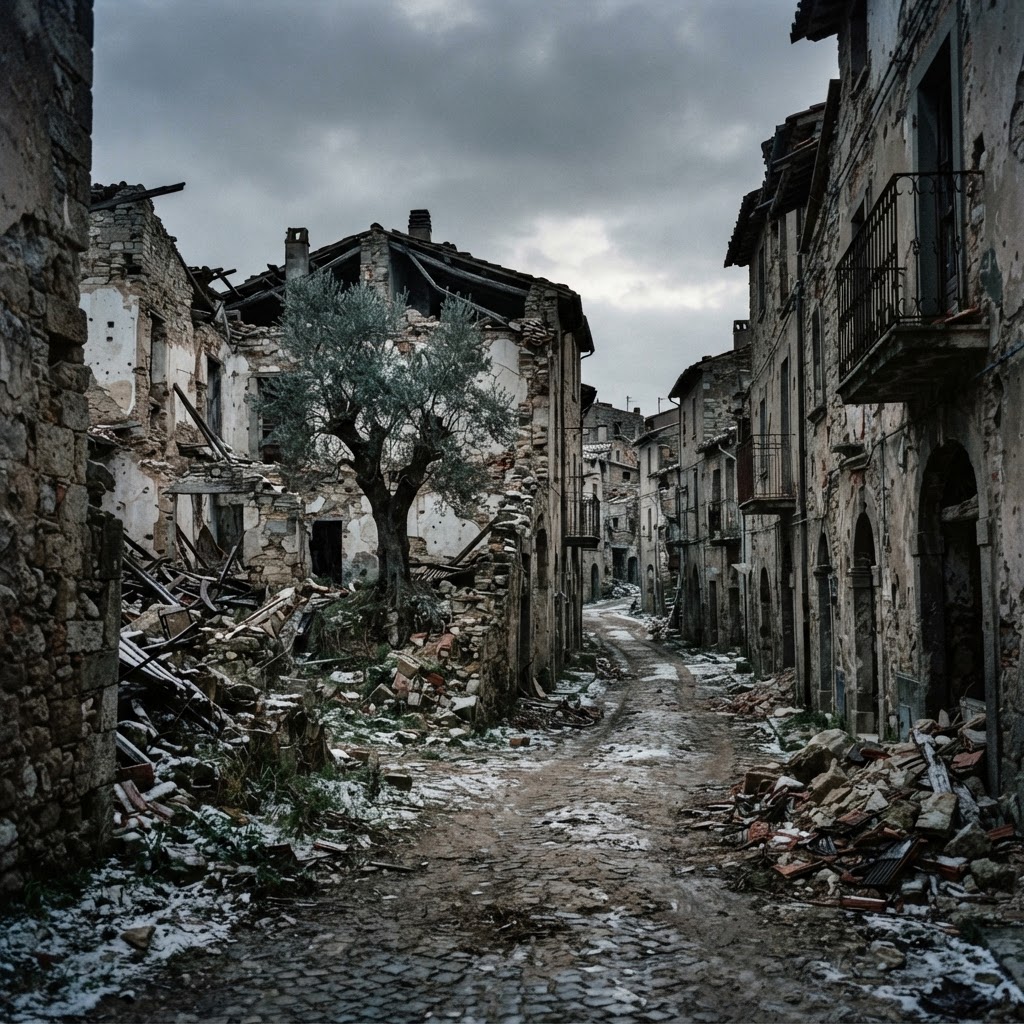
Frost reached the northern ramp of Arnhem Bridge at around midnight. He had roughly 500 men with him, including C Company of the 3rd Battalion and various attached troops — engineers, signals, a handful of Royal Army Service Corps drivers who had simply followed the column into the dark. They took up positions in the brick townhouses overlooking the ramp, broke through interior walls to create covered firing lanes, and waited.
A German attempt to rush the bridge with armoured cars was shattered by the battalion's anti-tank guns. The southern end remained in German hands. Frost could not cross — but he could hold, and he did.
### Four Days in the Houses
What followed was one of the most ferocious small-unit actions of the entire war. By day two, the perimeter around the bridge had shrunk to a handful of houses, their walls punched through by shellfire, their upper floors wreathed in smoke. German armour probing down the ramp was met with PIAT fire at suicidal range. Snipers worked from attic windows until the roofs collapsed around them.
Food and water ran short almost immediately. The radio sets that should have connected Frost to divisional headquarters — and to the XXX Corps columns pushing north from the Belgian border — operated on the wrong frequencies or failed outright. Frost's men were, in a very real sense, alone in the city.
Still they held. On the third day, a German staff car drove onto the bridge ramp and stopped. An officer climbed out, walked toward the British positions under a white flag, and offered honourable surrender. Frost, his right ankle shattered by mortar fragments but still directing the defence from a cellar, declined.
The men around him were equally resolute. Corporal James Sherwood of the Brigade Signal Squadron kept a radio link operational through three days of unrelenting bombardment. Lieutenant Jack Grayburn of A Company, already wounded on the first night, led successive counterattacks to keep the ramp clear, falling mortally wounded on the fourth day — an act of courage that would earn him a posthumous Victoria Cross.
### The End of the Perimeter
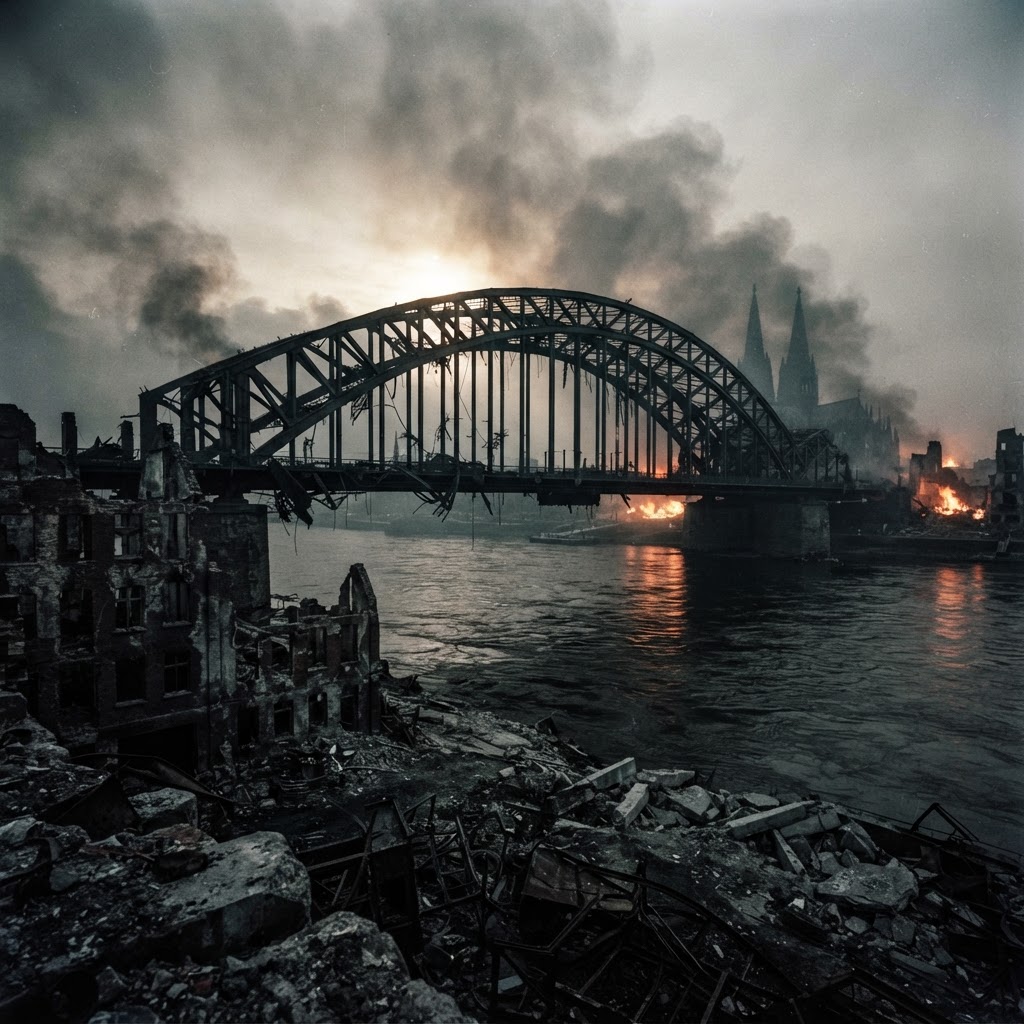
By the morning of 21 September, the houses were burning. German tanks had moved to point-blank range, firing directly through the walls. The cellars were filling with wounded men; the battalion's medical officer, Captain James Logan, worked without pause in conditions that defied description. When the ammunition finally ran out and the buildings collapsed around the defenders, Frost himself was carried into captivity on a stretcher.
Of the 740 men who had reached the bridge, around 200 were unwounded when the perimeter fell. The rest were dead or wounded. They had held for almost exactly 96 hours — four days against an SS Panzer Corps that had expected to brush them aside in hours.
XXX Corps, stalled by fierce resistance on the road south and delayed at Nijmegen, reached the Rhine two days too late. The bridge at Arnhem was never crossed. The war in Europe would last another eight months.
### What Remains Today
The bridge at Arnhem was renamed the John Frost Bridge in 1978 — a rare honour, a city bestowing a living soldier's name on its most famous landmark. Frost attended the ceremony himself. He died in 1993, the last holder of the bridge.
Each September, Arnhem and the surrounding communities of Oosterbeek stage one of Europe's most moving commemorative weekends. Dutch families still place flowers on the graves of men who died liberating a country that was not their own. The Airborne Museum at Hartenstein — housed in the former British divisional headquarters — preserves the story in extraordinary detail.
Frost's stand did not win the battle. It did not shorten the war. But for four days it held open a possibility, and the men who fought there did so with a tenacity that has never been forgotten — least of all by the Dutch.
*The 82nd anniversary of Operation Market Garden was marked on 17 September 2026, with ceremonies at Arnhem Bridge and the Oosterbeek War Cemetery.*
Market Garden
Arnhem
John Frost
2nd Parachute Battalion
Operation Market Garden
AI-Generated