Historical Analysis
Thunder in the Apennines: The Gothic Line's Forgotten Autumn
By September 1944, the Allied armies in Italy had cracked the Gustav Line, liberated Rome, and now faced Hitler's last great defensive barrier in Europe — the Gothic Line. What followed was a campaign the world chose to forget.
Walking in Their Footsteps
Author
September 28, 2026
6 min read
## Thunder in the Apennines: The Gothic Line's Forgotten Autumn
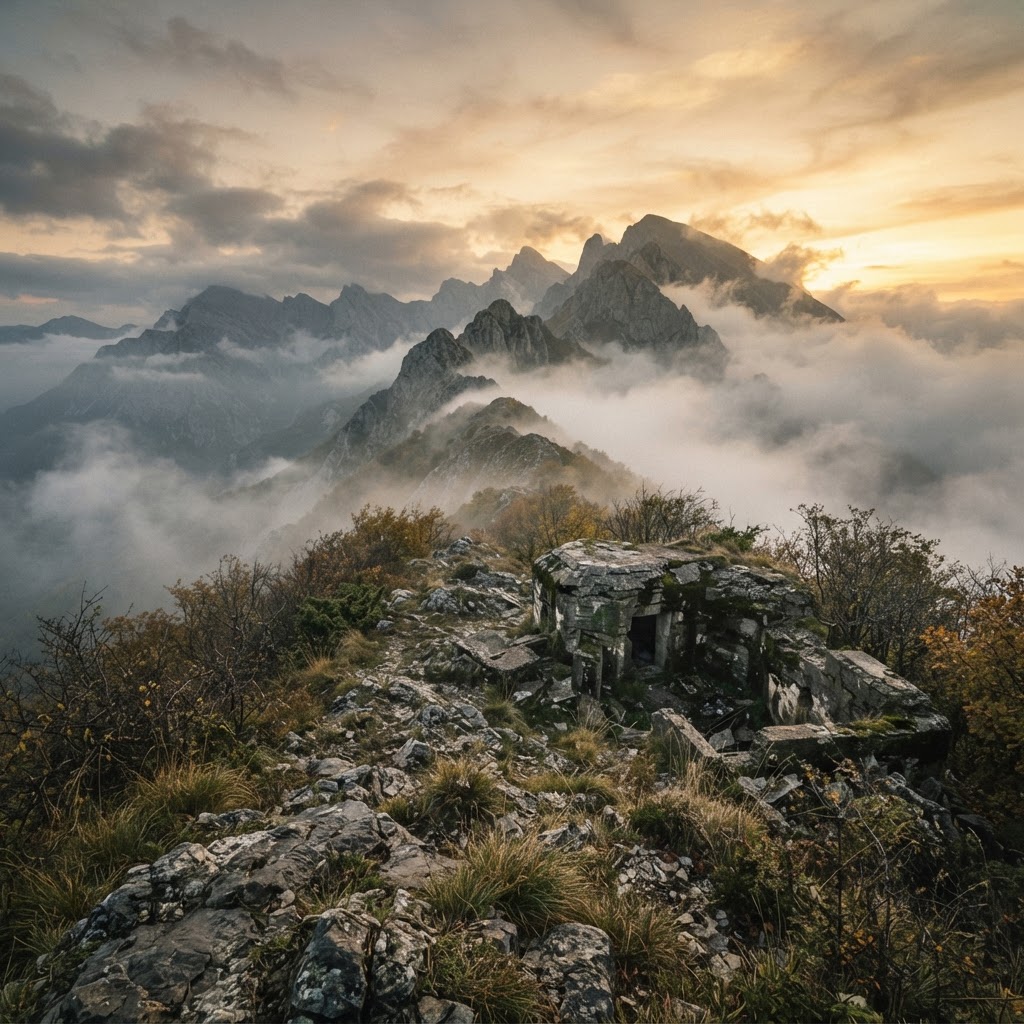
They called it the forgotten front. While the world's attention swung toward Eisenhower's armies racing across France and the audacious airborne gamble at Arnhem, a different kind of war ground on in the mountains of northern Italy. Here, in the mist-shrouded ridges of the Apennines, men from Britain, Canada, New Zealand, India, South Africa, Poland, and the United States clawed their way upward against one of the most formidable defensive systems of the entire war: the Gothic Line, or as the Germans officially named it, Gotenstellung.
This September marks eighty-two years since Operation Olive — the Allied assault on the Gothic Line — reached its brutal climax. It deserves to be remembered.
### Hitler's Final Wall in the West
The Gothic Line stretched 320 kilometres across the width of the Italian peninsula, from the Ligurian coast near Massa in the west to the Adriatic shore south of Pesaro in the east. Field Marshal Albert Kesselring, one of the most gifted defensive commanders of the war, had overseen the construction of over 2,300 machine gun nests, 479 anti-tank guns, 120,000 metres of barbed wire, and scores of concrete bunkers tucked into terrain that nature itself had already made nearly impregnable.
For the men of General Harold Alexander's 15th Army Group, it must have seemed that Italy had no end. They had slogged north through the Winter Line, Monte Cassino, the Hitler Line, and the Caesar Line. Now this.
### Operation Olive: The Adriatic Thrust
General Sir Oliver Leese's Eighth Army launched Operation Olive on 25 August 1944, striking along the Adriatic coast in a bid to punch through the Gothic Line before autumn rains turned the rivers into obstacles. The plan hinged on surprise — and for a few extraordinary days, it worked.
The Canadian I Corps, under Lieutenant-General E.L.M. Burns, led the initial assault. The 1st Canadian Infantry Division and the 5th Canadian Armoured Division tore through the forward German defences along the Metauro River, advancing with a speed that briefly seemed to promise a clean breakthrough. By 30 August, Canadians were fighting through Montecchio and approaching the main Gothic Line positions near the Foglia River.
What met them there was a wall of fire.
The Green Line — the foremost belt of the Gothic defences — had been reinforced by Kesselring with divisions pulled from reserve. The 1st Canadian Infantry Division's assault on Point 111 near Tomba di Pesaro on 30 August was a masterpiece of infantry courage and a testament to the terrible cost of breaking prepared defences. Private Ernest Alvia Smith of the Seaforth Highlanders of Canada — who would later earn the Victoria Cross in a separate action near the Savio River in October — was the kind of soldier this campaign produced: a man who simply refused to stop moving forward regardless of what the enemy placed in his path.
### The Mountains Don't Care
As the Eighth Army ground forward on the Adriatic flank, General Mark Clark's Fifth Army attacked through the central Apennines, targeting the critical passes that led toward Bologna. The 91st Infantry Division, the 34th Infantry Division, and the British 13 Corps faced terrain that made Cassino look like a training exercise.
Mountain warfare reduced everything to the essentials: a ridge, a gully, the men on either side of you. Staff Sergeant Vito Bertoldo of the 242nd Infantry Regiment, 42nd Infantry Division, would eventually earn the Medal of Honor for actions in the Italian campaign. But in these autumn weeks, individual heroism was almost beside the point — what the Gothic Line campaign demanded was collective endurance, unit by unit, day by day, in cold that arrived early and mud that arrived everywhere.
The autumn rains came in October, as they always did in Italy. Rivers swelled. Roads dissolved. The famous phrase attributed to Winston Churchill — that Italy was the
Gothic Line
Italian Campaign
Operation Olive
Canadian Corps
Eighth Army
WWII Italy
AI-Generated