Historical Analysis
The Desert Fox Outfoxed: El Alamein's Turning Point
On the night of 23 October 1942, over 1,000 guns opened fire across the Egyptian desert. What followed over twelve days would end Rommel's dream of the Nile — and change the war.
Walking in Their Footsteps
Author
September 21, 2026
7 min read
## A Thousand Guns at Midnight
At 2140 on 23 October 1942, the desert west of El Alamein erupted. One thousand and thirty Allied artillery pieces opened fire simultaneously along a 60-kilometre front, the muzzle flashes visible from the Mediterranean coast to the Qattara Depression. For fifteen minutes, the barrage fell on German and Italian gun positions. Then it shifted, creeping forward at a rate of one hundred metres every three minutes, and behind it walked the infantry of the Eighth Army — Australians, New Zealanders, South Africans, Indians, Free French, and British — into the deepest minefield of the entire North African campaign.
The Second Battle of El Alamein had begun. Twelve days later, Field Marshal Erwin Rommel's Panzerarmee Afrika was in full retreat. It would never stop retreating.
## The Weight of What Had Come Before
By late 1942, the Western Desert had been fought over for two years. The front had swung back and forth across Libya and Egypt with a rhythm that seemed almost mechanical — Axis advance, Allied retreat, Allied counteroffensive, Axis recovery. Tobruk had fallen in June 1942, a catastrophe that reached Churchill in Washington and caused him a humiliation he described as one of the most bitter moments of the war. Rommel had driven to within 100 kilometres of Alexandria. The files in Cairo were burning.
But Rommel's supply lines were stretched to breaking. Ultra intercepts — the decoded German Enigma traffic — were revealing the precise movements of Axis shipping in the Mediterranean, allowing the RAF and Royal Navy to interdict fuel and ammunition with increasing precision. By October, Rommel's tanks were critically short of fuel. He was also, for the first time, outnumbered: Lieutenant General Bernard Montgomery had assembled 195,000 men and 1,029 tanks against an Axis force of roughly 116,000 troops and 547 tanks, many of them Italian models inferior to the new American Shermans now reaching Eighth Army.
Montgomery was not a general who left things to chance. Operation Lightfoot — the opening infantry assault to clear lanes through the minefields — was planned with methodical precision. Operation Supercharge, the armoured breakout that would follow, was rehearsed until unit commanders could execute it in their sleep.
## The Sappers Who Led the Way
Before a single infantry boot crossed the start line, the Royal Engineers and their equivalents in Commonwealth formations had to clear paths through what the Germans called the Devil's Garden — a minefield belt up to eight kilometres deep, containing an estimated half a million mines, many of them booby-trapped. The sappers worked by hand in the dark, using bayonets and fingers to probe the sand, marking cleared lanes with white tape.
Sapper training had emphasised speed — thirty yards of lane per hour, per man. In practice, under fire, the rate was sometimes a third of that. Many sappers died on their knees, their fingers in the sand. The lanes they cleared were often only wide enough for a single vehicle, meaning that any breakdown or hit vehicle could block an entire armoured regiment.
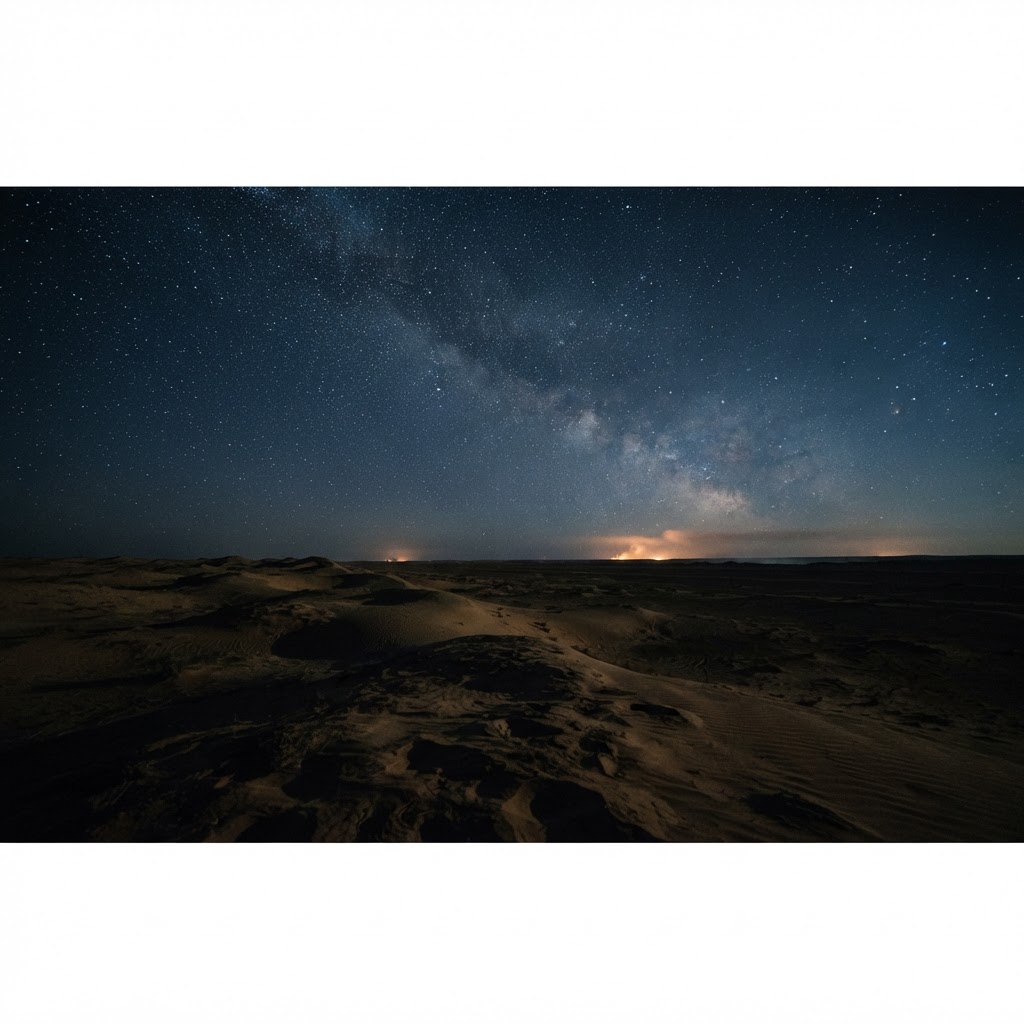
Sergeant William Kibby of the 2/48th Australian Infantry Battalion — who would be posthumously awarded the Victoria Cross for his actions during the fighting at Tel el Eisa — wrote to his family before the battle that he had never seen the stars look so bright as they did in the Egyptian desert. He was killed on 31 October 1942, leading his section against a machine-gun position, never knowing that the battle's outcome was already tilting irrevocably toward the Allies.
## Rommel's Dilemma
Rommel had not been in Africa when the battle opened. He was in Germany, receiving treatment for the low blood pressure and nasal catarrh that had plagued him through the summer. His temporary replacement, General Georg Stumme, died of a heart attack on the first day of battle — possibly triggered by coming under fire near the front. Rommel flew back immediately, resuming command on 25 October to find his front lines bending under pressure he had not anticipated.
His response was to counterattack — the instinct of a mobile, offensive commander confronted with a set-piece battle he had not chosen. The counterattacks consumed his irreplaceable armour. By 2 November, when Montgomery launched Supercharge — the breakout operation entrusted primarily to the 1st Armoured Division and the 2nd New Zealand Division — the Panzerarmee's ability to resist was crumbling. The anti-tank screen that Rommel threw across the path of the breakout was overwhelmed by sheer weight of material.
On 4 November 1942, Rommel ordered the retreat. Hitler countermanded the order — stand fast, victory or death. Rommel obeyed for eighteen hours, then resumed the retreat anyway, saving what remained of his force. The delay cost him most of his Italian infantry, who had no transport and were left behind.
## What the Desert Remembers
The El Alamein battlefield today is partially accessible as the El Alamein War Cemetery in Egypt, where 7,240 Commonwealth soldiers are buried in a setting of stark, affecting simplicity — white headstones in the sand, the desert stretching away in every direction, a silence broken only by wind.
Churchill, informed of the victory on 10 November 1942, gave one of his most carefully calibrated speeches. 'This is not the end,' he told the Lord Mayor's Luncheon in London. 'It is not even the beginning of the end. But it is, perhaps, the end of the beginning.'
He was right. The Thousand Guns at Midnight had changed the arithmetic of the war.
El Alamein
Rommel
Montgomery
North Africa
Eighth Army
Western Desert
AI-Generated