Historical Analysis
The Monastery That Watched Four Battles: Monte Cassino
It dominated the Liri Valley from 516 metres up and changed hands in blood four times between January and May 1944. The story of Monte Cassino is the story of the Italian Campaign itself.
Walking in Their Footsteps
Author
October 12, 2026
7 min read
## A Building That Became a Symbol
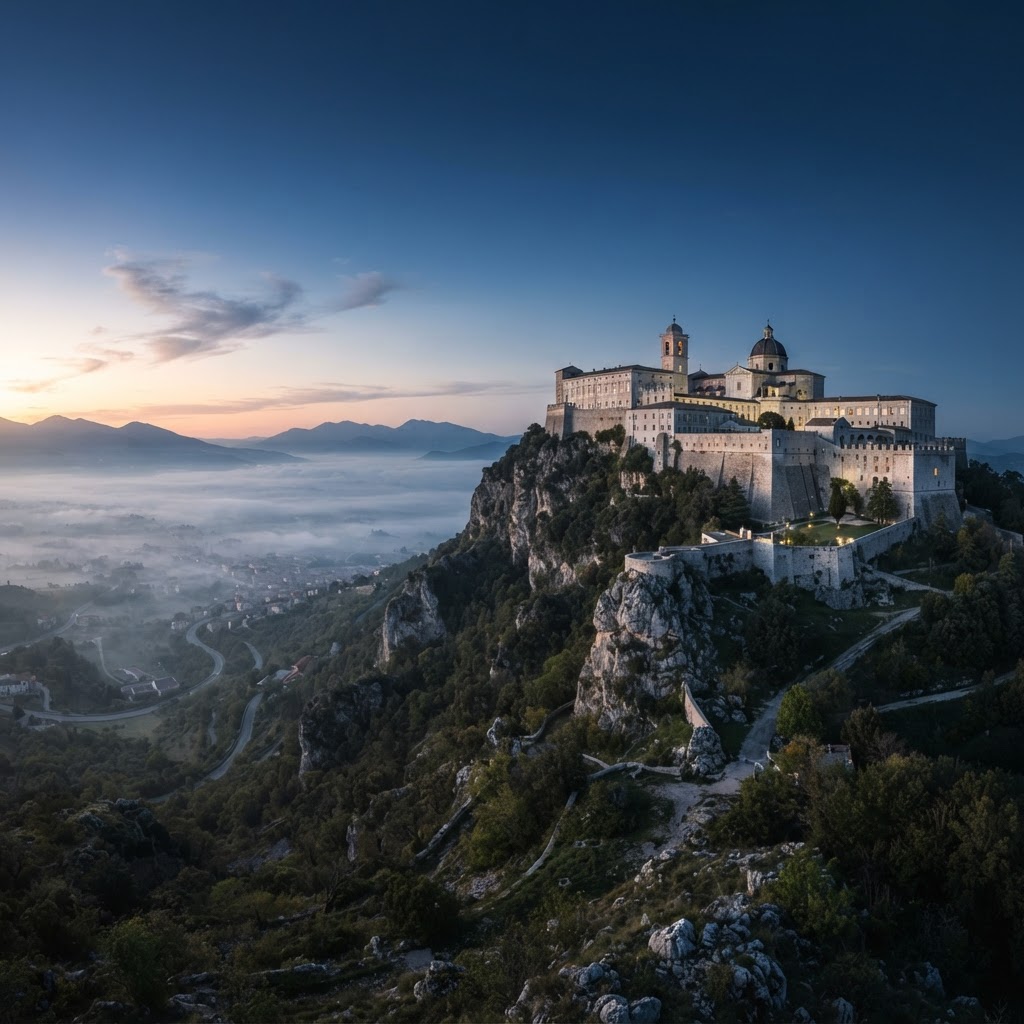
The abbey of Monte Cassino had stood for fourteen centuries when the first Allied shells began falling in the Liri Valley below it in January 1944. Founded by Saint Benedict in 529 AD, rebuilt after earthquake and sacking, it sat on a rocky massif 516 metres above the town of Cassino and dominated every approach to Rome along Route 6 — the ancient Via Casilina. Whatever army held that hill held the road. And the road was all that mattered.
Between 17 January and 18 May 1944, four separate major battles were fought for the Cassino position. They consumed Allied divisions from Britain, the United States, France, New Zealand, India, Poland, and Canada. They cost, in total, somewhere between 55,000 and 75,000 Allied casualties. The German defenders of the 1st Parachute Division and 15th Panzergrenadier Division suffered comparably. Monte Cassino is the Verdun of the Italian Campaign: the place where the fighting was most concentrated, most costly, and most seemingly futile — until, suddenly, it was not.
## The First and Second Battles: January to February 1944
The US 36th Infantry Division — the Texas National Guard — crossed the Rapido River on the night of 20 January 1944 in what became one of the most controversial American operations of the war. The river crossing was opposed by the 15th Panzergrenadiers in prepared positions, and the assault boats were shot apart before many reached the far bank. In two nights of fighting, the 36th Division lost approximately 1,681 men killed, wounded, or captured. The far bank was never held in any strength. General Fred Walker, the divisional commander, noted in his diary that he was sending his men to their deaths. He was right.
The abbey itself — genuinely not occupied by German troops during the first two battles, a fact Allied intelligence failed to establish conclusively — was destroyed in the second battle on 15 February 1944, when 229 American B-17s and B-25s dropped 453 tonnes of bombs on it. The attack was ordered partly in response to intense pressure from Allied ground commanders who were convinced the Germans were using it as an observation post. They were not. The bombing killed an estimated 230 Italian civilians sheltering inside. It also, with bitter irony, gave the German paratroopers the rubble fortifications they needed: the ruins of the abbey proved far easier to defend than the standing building had been.
## The New Zealanders and the Town Below
While attention focused on the abbey, the town of Cassino itself — in the valley below — was equally formidable. General Bernard Freyberg's New Zealand Corps was tasked with taking both the town and the heights in the third battle, launched on 15 March 1944 after the most concentrated pre-assault bombing yet seen in the Mediterranean theatre. Over 1,000 tonnes of bombs fell on the town in three and a half hours, followed by 890 artillery pieces firing simultaneously.
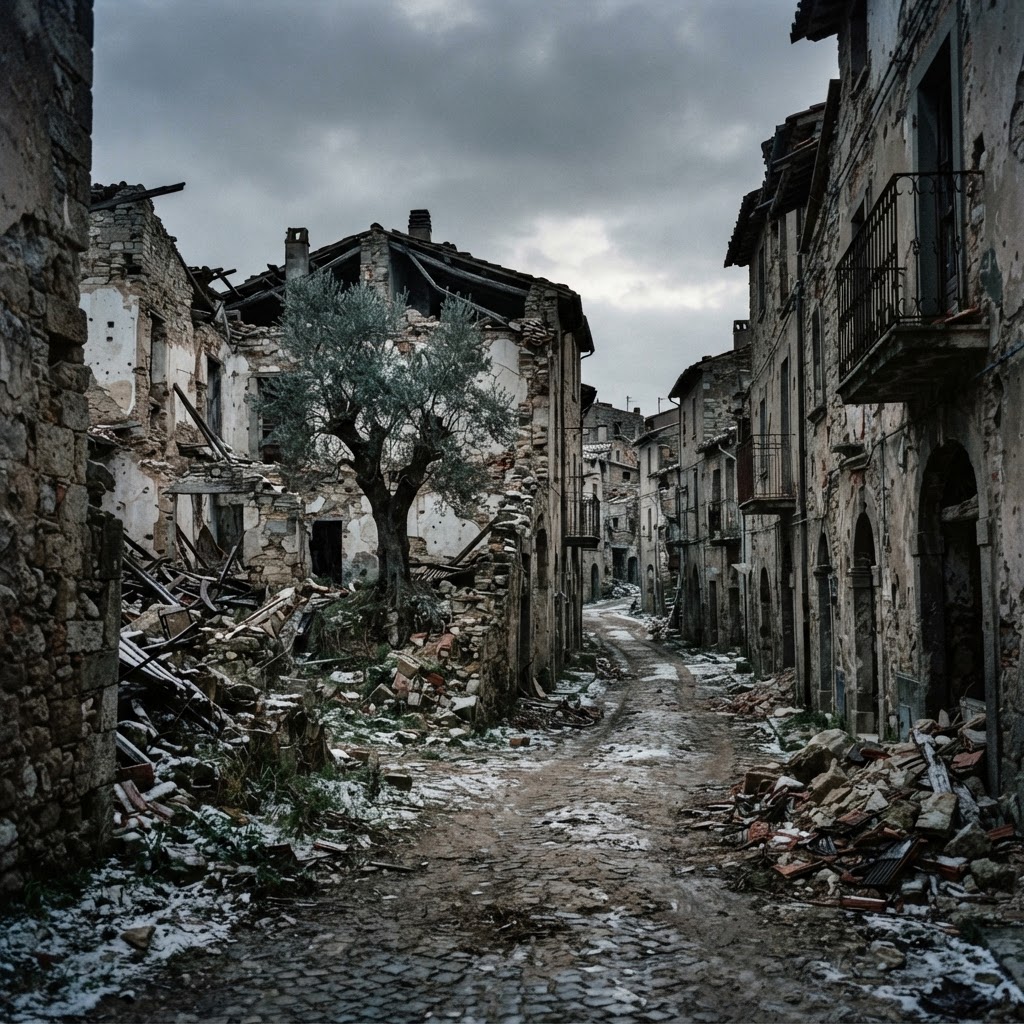
The town was obliterated. The German paratroopers of the 1st Division, sheltering in prepared positions and rubble bunkers, emerged from the bombardment shaken but intact. The New Zealanders and the 4th Indian Division fought for twelve days in the ruins — every building a fortress, every cellar a potential ambush — and could not take the objective. The third battle was called off on 26 March. Freyberg, one of the most decorated soldiers in the British Empire, would describe the fighting as unlike anything he had encountered in two world wars.
## The Poles on Point 593
The fourth and final battle — Operation Diadem — was different in concept. Rather than battering directly at Cassino, General Harold Alexander coordinated a broad offensive along the entire Gustav Line beginning on 11 May 1944. The French Expeditionary Corps under General Juin broke through the Aurunci Mountains to the southwest in fighting that deserves far more recognition than it typically receives. But the assault on the abbey heights themselves was assigned to the II Polish Corps under General Władysław Anders.
Anders's men knew what they were being asked to do. Many had survived Soviet prison camps after the 1939 invasion of Poland before being released to fight their way through Persia and North Africa to Italy. They attacked Point 593 — the key height commanding the approach to the abbey — on the night of 11 May and were repulsed with severe losses. They attacked again on 17 May. By then, the French breakthrough to the south had finally made the Cassino position untenable for the German defenders, who began withdrawing. On the morning of 18 May, a patrol from the 12th Podolian Cavalry Regiment reached the ruined abbey and raised a Polish flag made from a field dressing and a regimental pennant. There was no one left to fight.
Poland had no country to return to. Anders knew it by then. He sent his men up that hill anyway.
## What the Ruins Remember
The abbey was rebuilt after the war and reconsecrated in 1964. It stands today almost exactly as it stood in 1943, a testament to the stubbornness of both architecture and memory. The Polish Military Cemetery on the slope below contains 1,072 graves, each marked with the same simple white cross. Anders himself is buried there by his own request, among his men, far from a Poland he never saw free again.
To visit Cassino is to understand something essential about the Italian Campaign — and about the cost of ground that looks, on a map, so small.
Monte Cassino
Italian Campaign
Polish Corps
World War II Italy
AI-Generated